
Contracts & Documents in International Trade: What to Agree, What to Attach, What to Check
Here's a fact that surprises people who've never shipped a container: most export deals don't collapse at the port. They die in a spreadsheet, in a PDF, in a...
Daniel R. Whitfield 8 min read
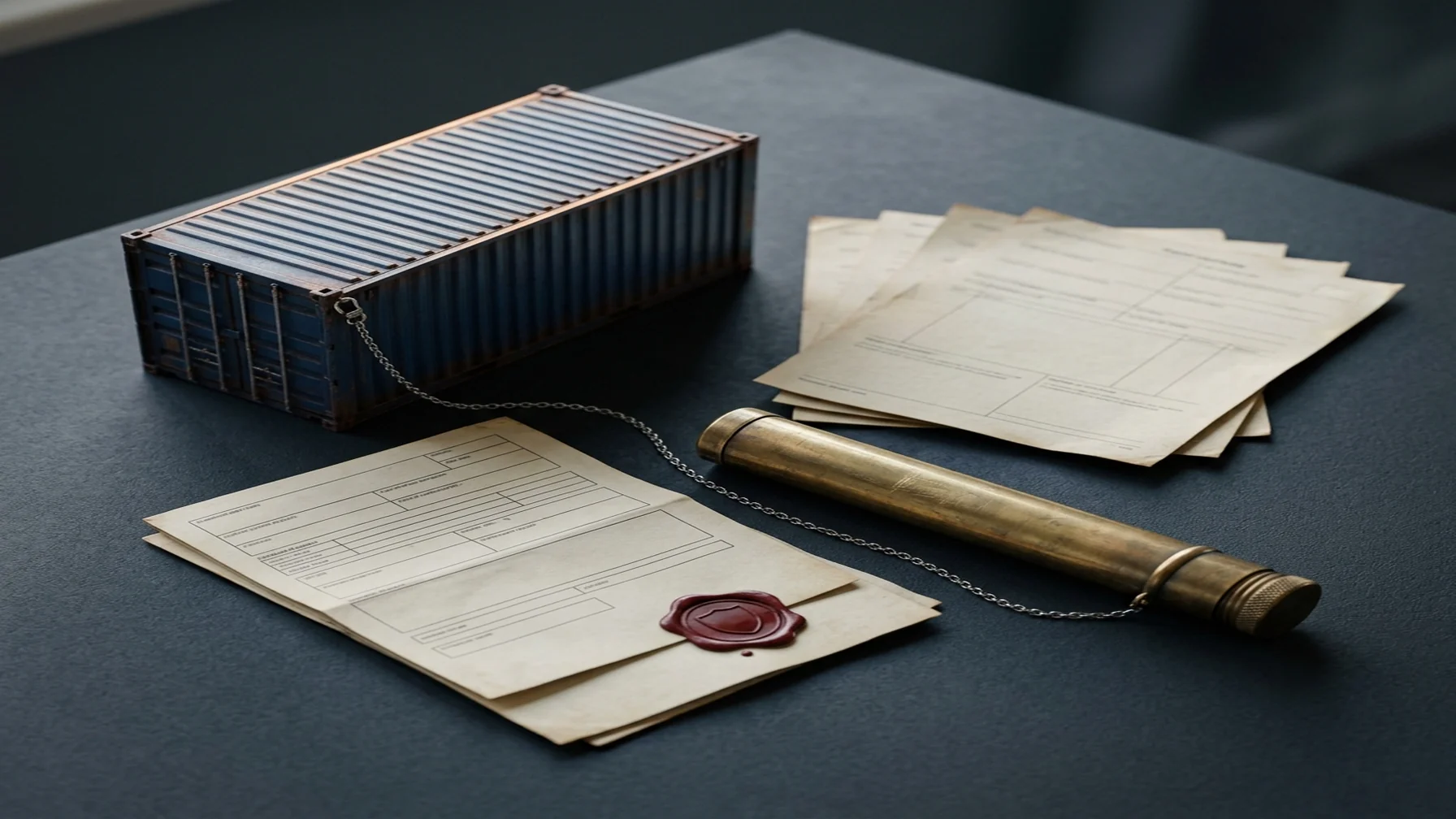
Here's a fact that surprises people who've never shipped a container: most export deals don't collapse at the port. They die in a spreadsheet, in a PDF, in a line of text that says one thing on the contract and something else entirely on the invoice. Contracts and documents in international trade aren't the tidy-up work you do once the handshake's done. They're the machinery that decides who eats the cost when a container is stuck in customs for twenty-two days and nobody's answering emails.
I want to look at this from the angle most guides skip. Not "here are the documents you need" — you can find that list anywhere. The real problem is the seams. The places where the contract, the Incoterms rule and the payment instrument quietly disagree with each other, and nobody notices until the bank refuses the set.
The contract is the source. Everything else is a photocopy.
A sales contract nails down the commercial reality: what's being sold, how much, at what price, by when, who inspects it, and where you sue if it goes wrong. Every other piece of paper in the deal should trace back to that document like a river to its source. When they don't — and they often don't — you end up in a dispute that no amount of email chains will settle cleanly.
Three clauses carry more weight than the rest of the contract combined: the delivery term, the payment term, and force majeure. Get those right and the rest usually sorts itself out. Get the delivery term vague and every downstream document inherits the fog. It's like building a house on a slope — everything above it leans, even the parts that look level.
The practical test takes ten minutes. Pull your contract. Pull the commercial invoice, the packing list, the bill of lading, the certificate of origin. Read the goods description out loud from each one, one after another. If the wording drifts in ways that matter — grade, specification, HS code — you've got a mismatch that a bank examiner or a customs officer can use against you. Better to find it in your office than at the counter.
Where document sets break: three failure points
Disputes cluster. They're not evenly distributed across the document set — they pool around the same handful of places, year after year. Watch these three and you'll prevent most refusals and most customs delays. Not all. Most.
The description drift. The contract says "cold-rolled steel coil, grade X." The invoice says "steel coil." The credit reads "cold rolled steel coils, grade X, as per proforma invoice dated [date]." Three versions of the same goods land on the bank's desk and any mismatch is grounds for refusal. This is the single most common failure point. Standardise the wording across every document before shipment, not after the vessel has sailed.
The transport document. Two ways this goes wrong. It arrives late, or it arrives amended. A bill of lading issued after the latest shipment date in the credit is a discrepancy. A "dirty" bill noting damage or shortage is another. Compare the on-board date against the latest shipment date while the vessel is still in port. Once she sails, amending that bill depends entirely on whether the carrier feels like helping you — and they have no reason to.
The certificate of origin. This one fails on format more often than on facts. Preferential origin documents need the correct issuing authority and the form that matches the trade agreement being claimed. Get either wrong and the shipment still clears customs — at the non-preferential tariff rate. Which quietly eats the margin the whole contract was priced on. You did the maths, you built in 8%, and then a form number was wrong and there goes your 8%.
Contracts and documents must speak the same Incoterms language
Incoterms 2020 rules do four things: allocate costs, allocate risk, set delivery obligations, and assign export/import clearance duties. That's it. They do not cover payment. They do not cover title transfer. They do not cover product liability. People assume the three-letter rule handles far more than it does, and that assumption is where contracts rot.
The recurring mistake — I've seen it in deals that were otherwise bulletproof — is naming an Incoterm in the contract and then writing a different arrangement into the invoice or the PO. FOB Rotterdam in the contract, plus a clause saying the seller arranges carriage. That's a contradiction. The buyer has paid for something the rule says is the seller's job, and the bill of lading may not match either version. Pick one. Mean it. Write it the same way everywhere.
Two placement questions matter more than traders expect. Under C-terms like CIF or CPT, risk passes at shipment even though the seller pays freight to destination. Under D-terms, risk and cost travel together to the named place. So if your payment schedule assumes the seller carries risk until arrival, use a D-term or insure explicitly. The Incoterm alone won't hand you that result just because you want it to.
And name the place precisely. "CIF Shanghai" without the port is incomplete. "DAP buyer's warehouse" invites an argument about which warehouse. Incoterms only work when paired with a specific, named location. Otherwise you've bought a rule and left the destination blank.
Documents that carry money, not just information
Some documents inform. Others trigger payment. In a letter of credit the bank pays against documents — not against goods. Which means the document set is the product being sold to the bank. A typo becomes the difference between getting paid and getting a refusal notice with a five-day clock running on it.
Here's a working checklist of the documents most often demanded under a documentary credit or documentary collection:
- Commercial invoice — goods description must match the credit wording exactly. Not a paraphrase. Not a "close enough." The credit wording.
- Bill of lading or sea waybill — check consignee, notify party, port of loading and discharge, and whether it's marked "clean on board."
- Packing list — weights and quantities consistent with the invoice and the transport document.
- Certificate of origin — often needed for preferential tariff treatment; the issuing body and format must be accepted by destination customs.
- Insurance certificate — cover amount and currency usually specified in the credit; CIF requires the seller to insure at least to the stated minimum.
- Inspection or quality certificate — pre-shipment inspection reports, where the contract calls for them.
Banks examine all of this against the credit terms, and discrepancies are common — more common than the polished guides suggest. Under UCP 600 a bank can refuse non-compliant documents, and the applicant has limited time to waive the discrepancy. Build in a pre-check before shipment. After shipment is too late and everyone knows it.
Payment method changes what documents you need
The single biggest variable in your document requirements isn't the product. It isn't the destination. It's how you're getting paid. A telegraphic transfer needs little beyond an invoice. Open account runs on trust and commercial records. A letter of credit turns every document into a compliance item with a pass/fail grade.
| Payment method | Typical document set | Main risk to the seller |
|---|---|---|
| Advance payment | Invoice; shipping documents as agreed | Low payment risk; buyer bears performance risk |
| Letter of credit | Full documentary set per credit terms | Discrepancies causing refusal or delay |
| Documentary collection | Draft, invoice, transport document, plus any certificates | Buyer can refuse to pay or accept documents on arrival |
| Open account | Invoice and commercial records | Non-payment after goods have shipped |
None of these is inherently better. A buyer you've shipped to for nine years may justify open account. A first shipment into a new market usually justifies a credit, or at minimum a collection. The contract should state the payment method explicitly and name the documents required — so the financing side and the commercial side don't quietly invent two versions of the same deal and discover it at the bank counter.
Building a document routine that survives the first shipment
Repeatable routine beats individual heroics. Every time. Assign one person — one — to maintain the master document checklist, updated whenever a new market or payment method enters the picture. Before each shipment, verify that the contract terms, the Incoterm and place, the payment method and the document list all point to the same deal. Keep the verification record. If a discrepancy surfaces later, you can show what was checked and when, and that record is worth more than any number of apologetic emails.
This layer of the export business is tedious. It's tedious precisely because it's the layer that converts a handshake into enforceable rights — the operating system of the deal, not an afterthought bolted on at the end. Treat it that way and disputes get rarer. And when they do arrive, they're much easier to resolve. Which is really the only thing you can guarantee in this business: not that nothing goes wrong, but that when it does, you can point to a document and say this is what we agreed.